Crawling from the Slime

| No Comments | No TrackBacks

About ten days ago as I write this, someone sent me e-mail in response to my earlier post here and blew my mind. I was thinking of writing the whole exchange up as a post, and I may one day do that, but in the meantime I just wanted to say that the discussion altered some of my approach to my paintings. In particular I'm thinking more about Munsell values across the whole work.

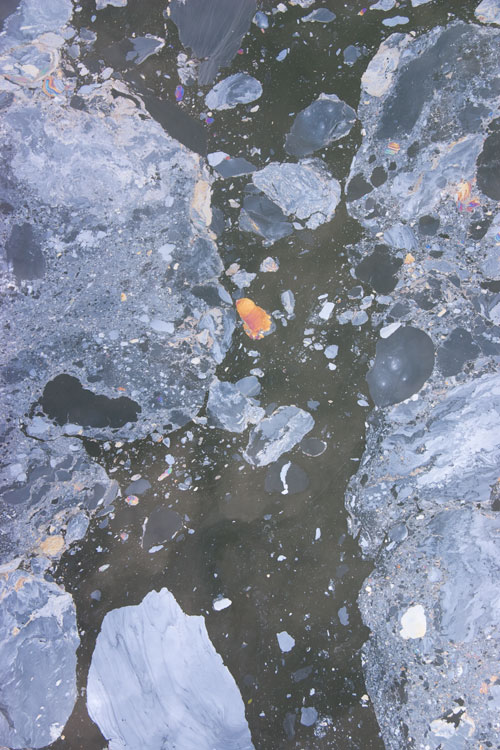
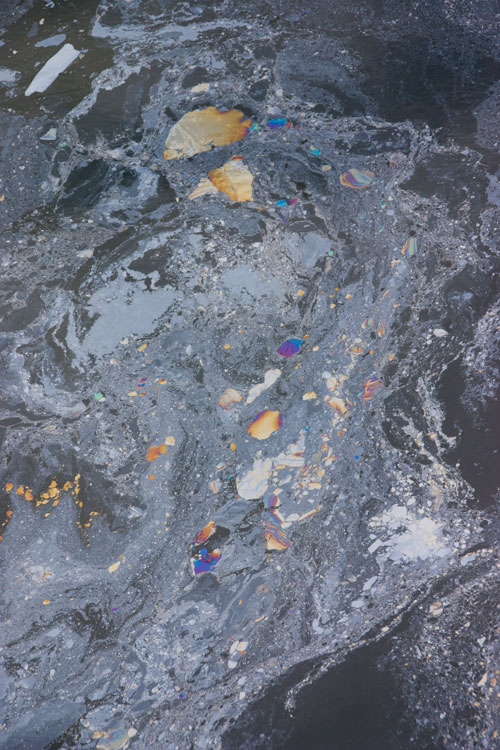
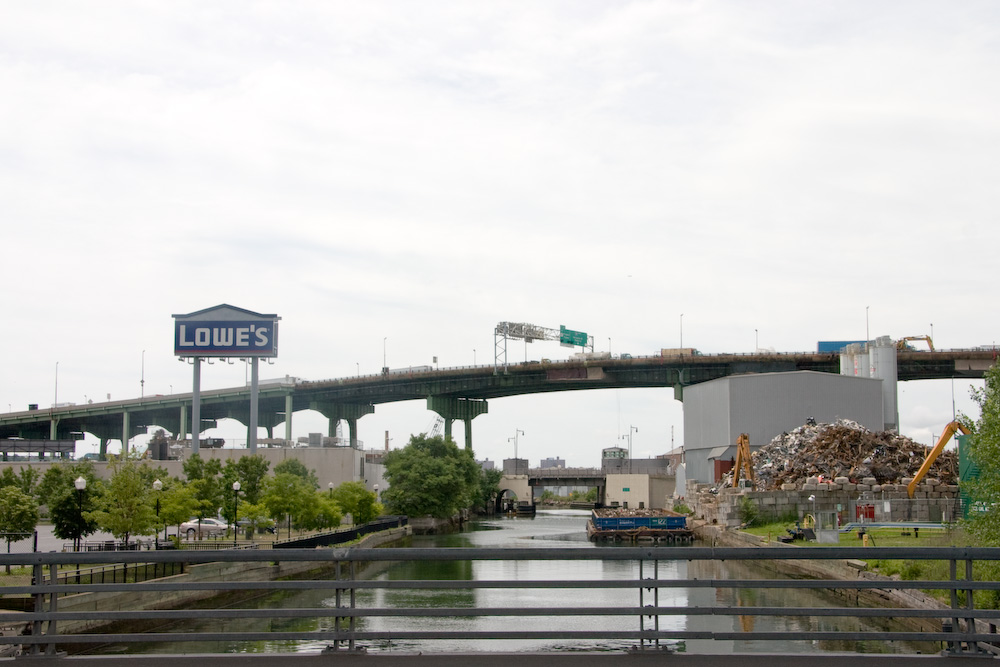
But before we get into the studio, we have to walk from the subway over the Ninth Street Drawbridge. It's not the most scenic route over the Gowanus Canal -- I'm no Gowanus expert but I'd have to vote for the "boardwalk" crossing up at Carroll Street -- but it's got a lovely view of the expressway and the surface of the canal itself. Some days the water is coated with a scum of oil and other scary stuff which is, in one way, absolutley horrifying; and yet it's also visually beautiful. When the water is calm it looks almost like colored glass has shattered on the surface.

Gowanus Canal, 2009

Gowanus Canal, 2009.

Gowanus Canal, 2009

Gowanus Canal, 2009.

Gowanus Canal, 2009

Gowanus Canal, 2009.

You can also see the giant Lowe's sign that brings this fair city light. It's okay if it clutters up the view: They put in that little promenade down on the left in the photo. Over on the right you can see a barge waiting to be filled up with construction debris, or maybe some kind of recyclable stuff. A lot of people talk about cleaning up the Gowanus Canal, and it's a great idea, but it's going to be really hard, because unlike other industrial waterways which have fallen into disuse on a large scale -- like the Hudson or the Passaic -- it's a working body of water.

Gowanus Canal, 2009

Gowanus Canal, 2009.

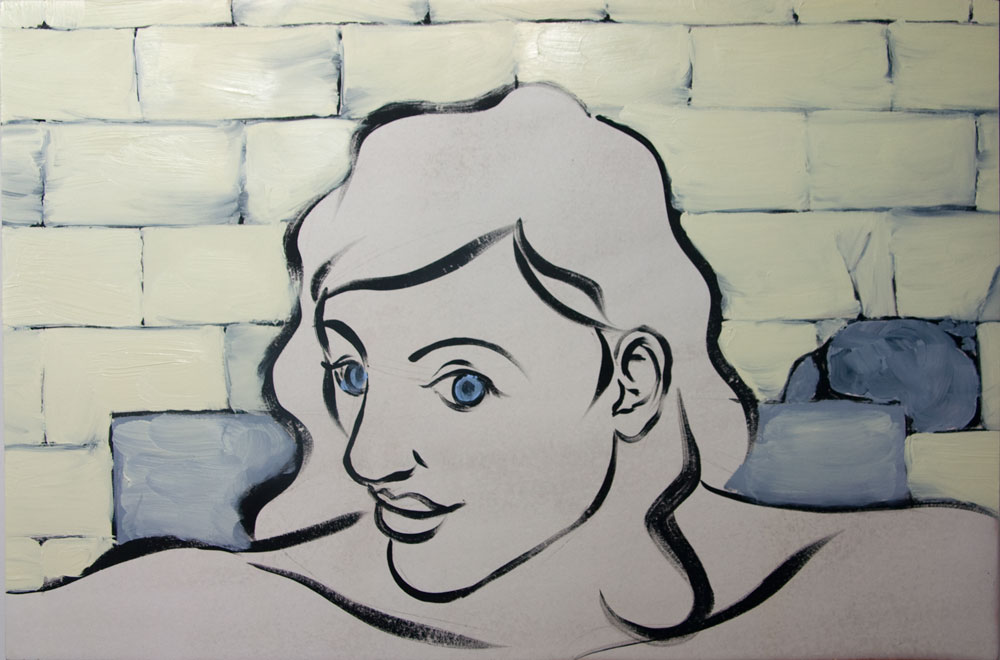
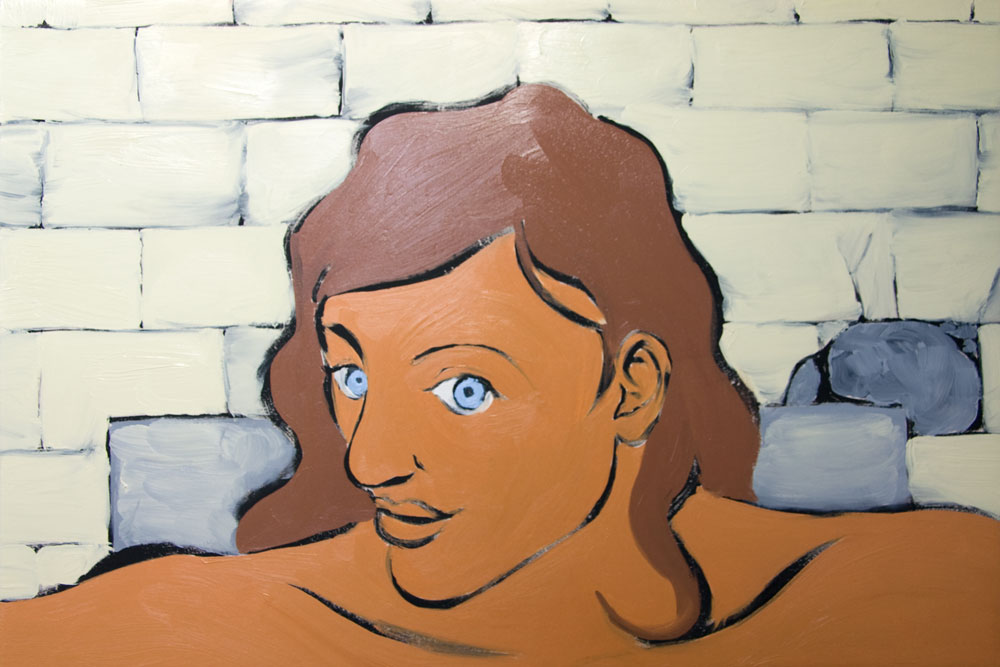
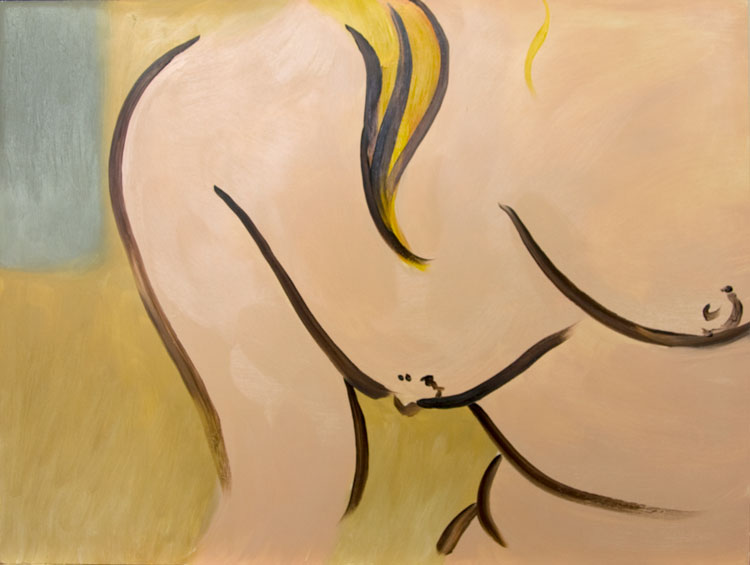
Okay, so we've walked over the canal, we've passed Tonky's sign, we're in my studio. And what do we see? Why, my latest paintings, of course.

I apologize for the unimaginative titles. I mean, "Reclining Nude"? Really? But I'm not feeling creatively titular at the moment. And, as usual, I forgot the sizes.

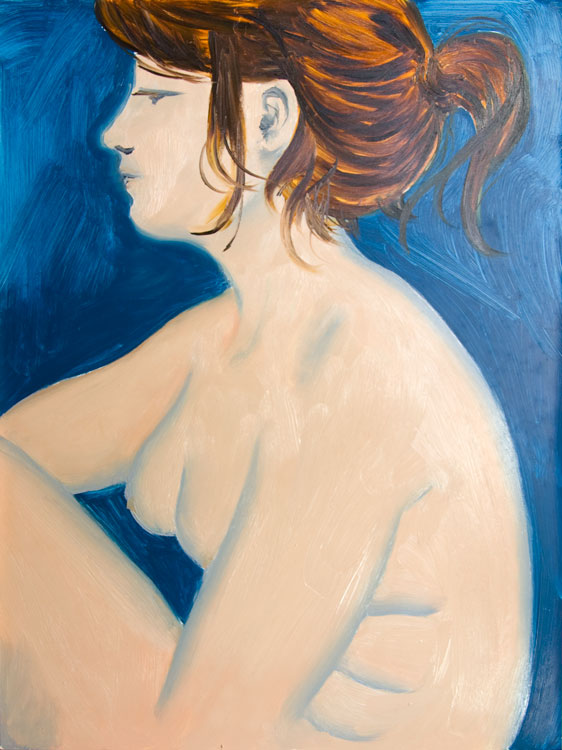
Chris Rywalt, Blue and Red Nude, 2009, oil on panel

Chris Rywalt, Blue and Red Nude, 2009, oil on panel

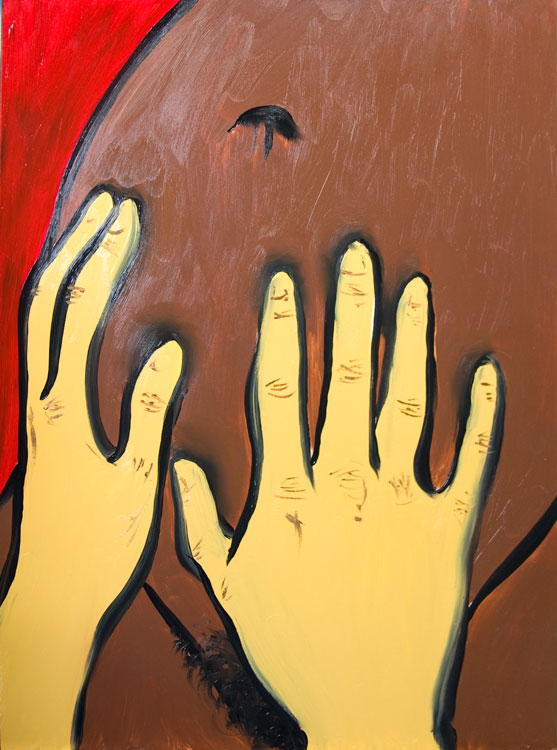
Chris Rywalt, Black and Blue, 2009, oil on panel

Chris Rywalt, Black and Blue, 2009, oil on panel

Chris Rywalt, Tiny Yellow and Green Nude, 2009, oil on panel

Chris Rywalt, Tiny Yellow and Green Nude, 2009, oil on panel

Chris Rywalt, Spanish Teacher, 2009, oil on panel

Chris Rywalt, Spanish Teacher, 2009, oil on panel

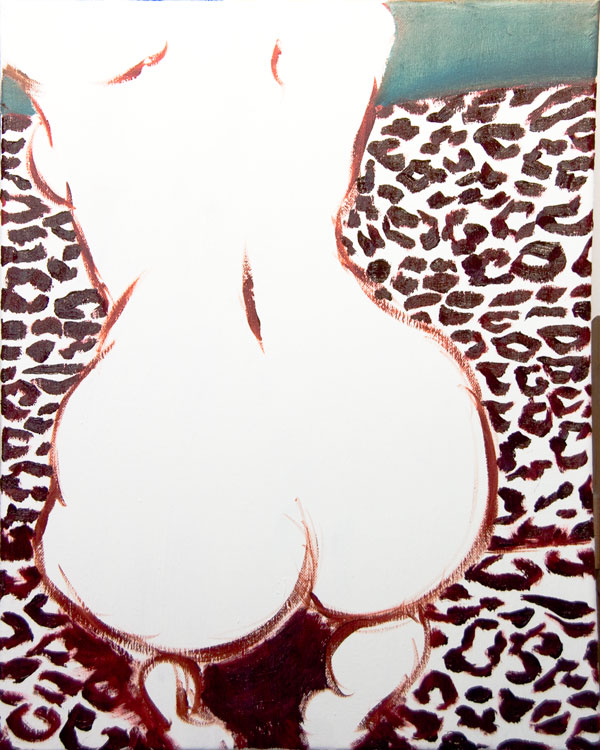
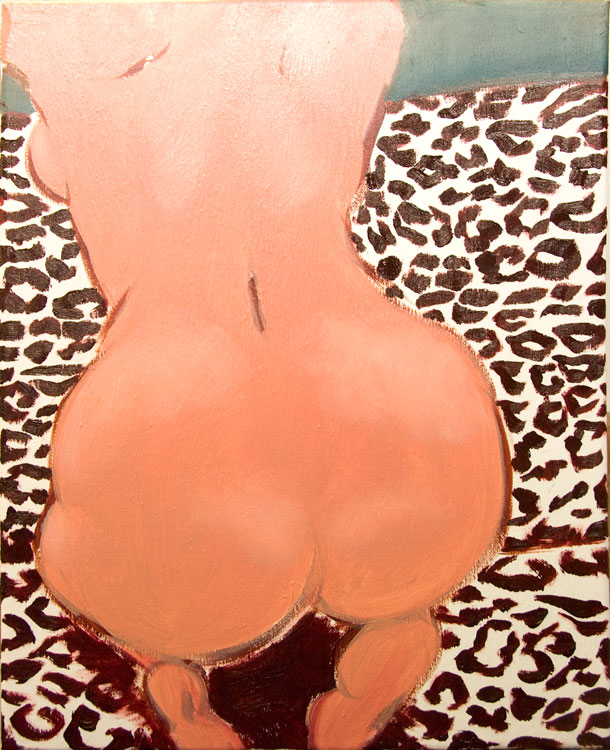
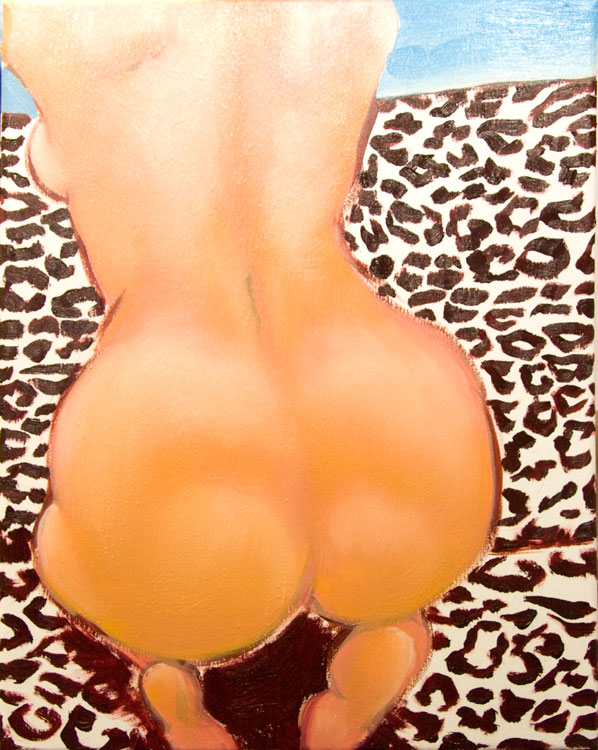
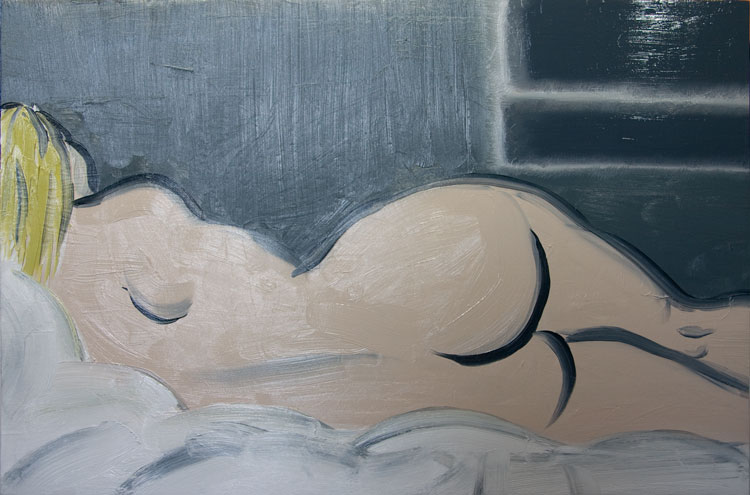
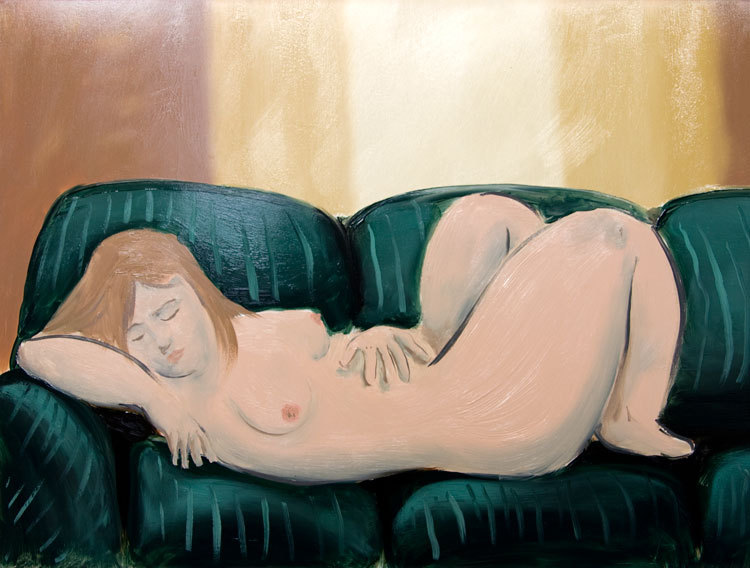
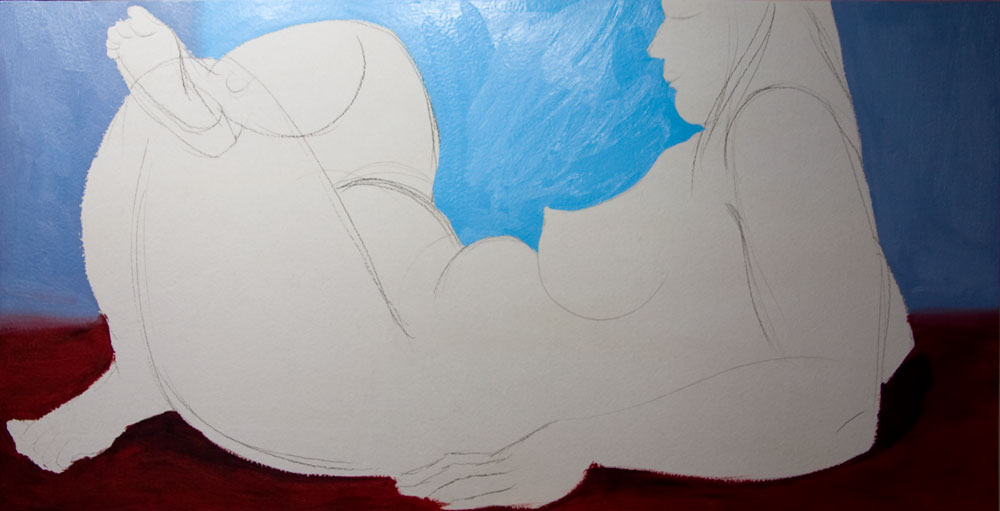
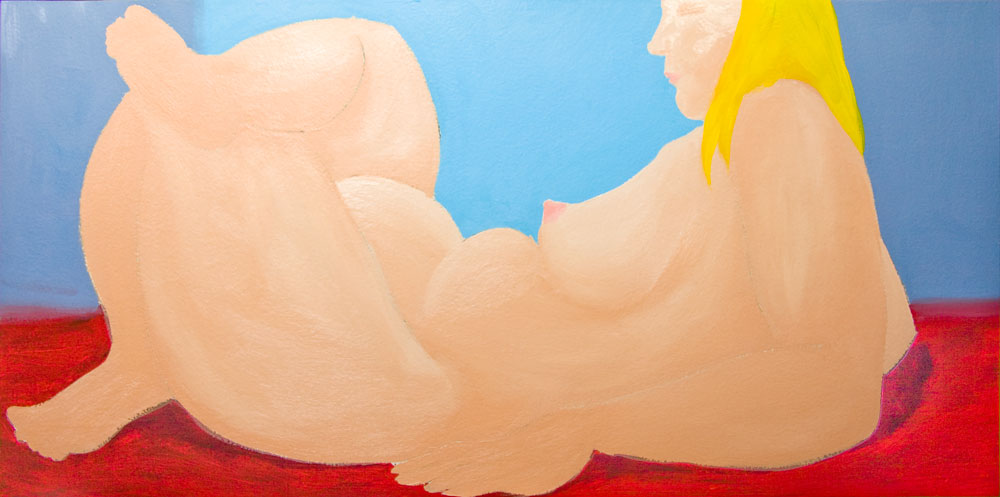
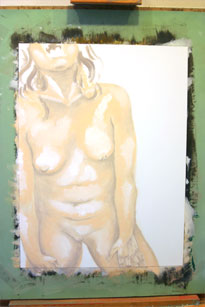
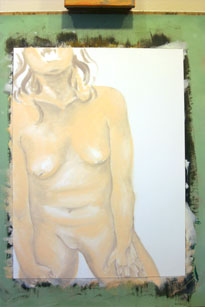
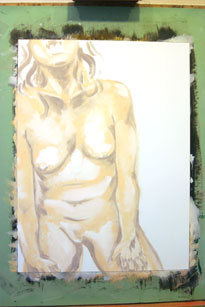
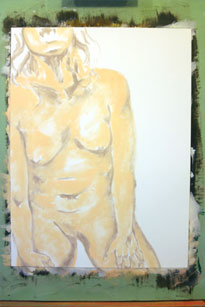
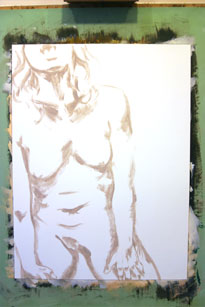
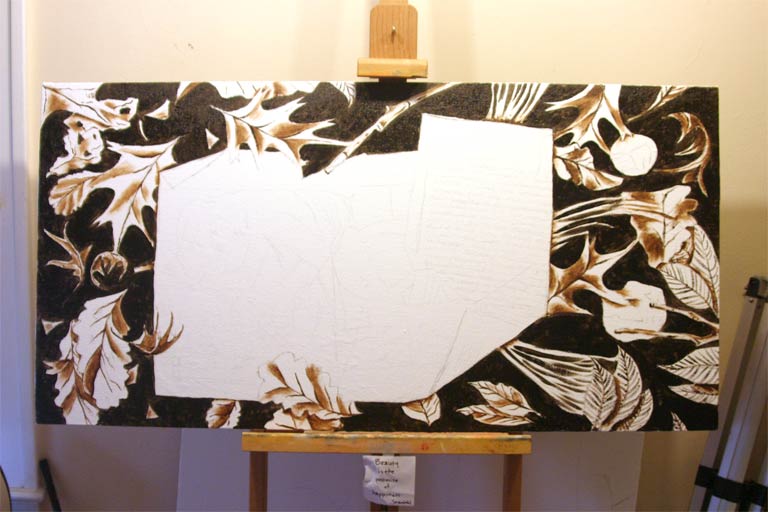
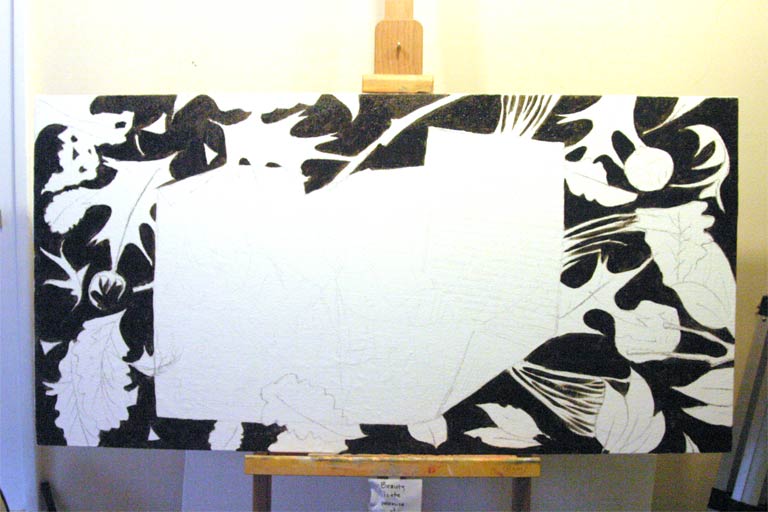
I'm most happy with "Reclining Nude" despite the lousy generic title. If I get around to writing it up, the e-mail lesson I received will make it clear, but the short version is, I learned that some of my more successful paintings have a range of values; and similar, but unsuccessful, ones, are made up of paints very close in value. I decided to make use of this in mixing my colors, and this is the best result so far. (Also note use of the Golden Section.)

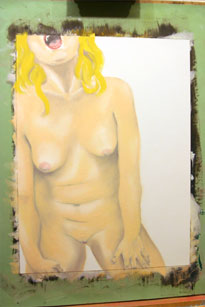
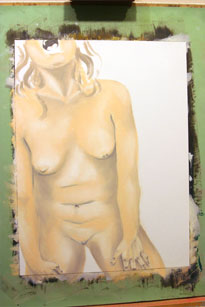
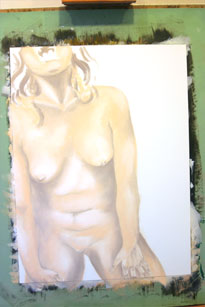
Chris Rywalt, Reclining Nude (in progress), 2009, oil on panel, 48x24 inches

Chris Rywalt, Reclining Nude (in progress), 2009, oil on panel, 48x24 inches

Chris Rywalt, Reclining Nude (in progress), 2009, oil on panel, 48x24 inches

Chris Rywalt, Reclining Nude (in progress), 2009, oil on panel, 48x24 inches

Chris Rywalt, Reclining Nude, 2009, oil on panel, 48x24 inches

Chris Rywalt, Reclining Nude, 2009, oil on panel, 48x24 inches

Method, Madness

| No Comments | No TrackBacks

I mentioned in a previous post that I've been following the Mark Kostabi Method for the past three years. I decided recently that it was taking too long, or maybe that I'm not applying the Method properly. I decided I should do what people always advise when trying to break into any business: Be methodical and persistent.

So I've taken it upon myself to visit every gallery I can, starting with Chelsea and then moving on to the Lower East Side and maybe Williamsburg. And I'm only limiting myself to those areas because I have to draw the line somewhere. I went to Chelsea Art Galleries Dot Com where you can helpfully find a list of every art gallery in New York City, just about, and get the list by street address.

It's a very long list. There are over three hundred listed galleries in Chelsea alone.

I started going down the list last Tuesday. It is with a heavy heart and very weary feet (to say nothing of calves, knees, thighs, ass and back) that I type this on a rainy Thursday. (I was supposed to go back out today but I'm really too tired. Also, it's raining. Did I mention that?)

My heart is heavy because I visited somewhere around forty galleries in one day and I realized something: There are a lot of galleries showing a lot of art.

When I said this to my long-suffering wife Dawn, she said, "But isn't that a good thing? Doesn't that mean there are plenty of places to show your art?"

Maybe. But what it means to me is this: The art world is enormous. Absolutely burgeoning with artists being shown by galleries. And in all of that I'm supposed to think I can find a dealer who can somehow convince enough buyers to purchase my art so I can make a living. How is that even possible? There simply cannot be enough art customers to make a dent in the market. There's simply too much supply and it's impossible there's enough demand. Impossible.

Even if I were confident that I'm the world's greatest artist, I'd have to be daunted by the numbers. And I'm not confident in that. There's no way for me to be confident in that. In fact I'm fairly sure now that I will never be confident in that. Because how can one tell if one's a good artist?

How do you determine if an artist is any good? Over at Franklin's Art Blog the commenters all seem pretty clear on this, but to me they're all ultimately dancing around the final analysis. Because they talk about humbling yourself to the demands of your medium, they talk about work and discipline. Work hard and you will be rewarded.

But what's working hard in art, in painting? What's it look like? When I was a computer programmer, I knew what working hard was like in my profession. You tried to take what my professor Derek Morris called the customer's "mumble mumble" and turn it into logical structures. You guessed at how long it would take you to figure out what the customer wanted and make it for them. You wrote code and designed data structures and you made sure you had it done by the date you promised it. If your programs didn't work, if you were late, if your work was unsatisfactory, you tried harder next time.

Likewise, when my father was an auto mechanic, I saw what hard work was. You figured out what was wrong with something and you fixed it. In a way, that was a lot like computer programming. But you also pulled wrenches and lifted heavy things and stretched and squeezed and banged your knuckles a lot. You finished jobs by the date you'd promised. You stayed late if you had to and you went in early to get the work done. Working hard had a pretty clear definition.

But what's working hard in painting? Everyone agrees you can go to the studio every day and paint a painting and spend months and months on just one and still end up with a crappy painting. You can practice and gain skills, maybe, but even those are questionable: What's skill in painting? Color matching? Representation? Grasp of the Munsell value scale? Composition?

My old Glee Club director, Professor William F. Ondrick, always liked to say to us during practice, "There's no substitute for the work, not even genius." The work there was clear, too: Come in on time, follow the director, get the notes right. Practice pracitce practice. We'd spend hours plugging, going over tricky phrases to make sure we had the timing and inflection just right.

I won't dispute the value of practice. Of work in that sense. But it doesn't lead inexorably to goodness, does it? To quality? No, it doesn't. You can get better but are you really good? If you're a computer programmer or an auto mechanic, you can answer that question. If you're a singer in a Glee Club, well, it's harder but there's still not much wiggle room (I was never very good myself). But if you're an artist?

The only real way to tell if you're any good as an artist is to have lots of people see your work and decide, for themselves, if it's any good. If enough people think you're good, then you are. How many is enough? My thinking: More than will see it in your lifetime. The culture decides what's valuable, what isn't, and it takes a long time for those decisions to be made. In the meantime, though, you can get an idea, maybe. Maybe enough of an idea to sustain you while you're alive. Maybe not. But it's all there is.

So the main thing, for an artist, is to find an audience. To get people to look at your work and decide for themselves if you're any good. That's what it's all about, then: Finding that audience. Getting the work out there. Getting it seen. Communication.

And how is that possible today?

It works for some artists. What makes them different? Which is like asking, what's success? Just a few quick names off the top of my head, living artists who are well known: Chuck Close, Elizabeth Peyton, Eric Fischl. Why them and not anyone else?

Do they work harder than other artists?

Are they better than other artists?

Is it luck? Is it persistence? Is it consistency? Happenstance? Magic?

Out of the masses they emerge. They've been chosen. By whom? In what way? Is there something to be done here? Is it all just arbitrary?

With all that's going on how could I possibly get noticed?

I've been going to galleries in Chelsea for three years and I haven't even set foot in a third of them. My journey on Tuesday made it clear to me it's going to be extremely difficult for one person even briefly to visit every single gallery. And that's just one neighborhood in one city on the planet. There are only about 2 million households in the United States with an annual income over $250,000. That's approximately the fine art market right there. You do the math.
For Corinne

| No Comments | No TrackBacks

My daughter, ten years old, calls out as she leaves.
The only word I hear is "Daddy"
and I run upstairs to the front door to see her
striding purposefully down the street to her friend's house
wearing her kerchief on her head,
one of her kerchiefs she always wears, which I love so much and find so infuriating,
because I don't know where it comes from
and I don't think it looks good, this style,
but it's so completely hers
and I love that she's true to herself,
whoever she may be.

On My Back

| 1 Comment | No TrackBacks

I have this very clear memory from my childhood. I must've been very young, no more than eight years old. Two doors down from me there lived this older boy, Steve. He always called me Chris-O. Great kid, grew up into a great guy as far as I know. I haven't had any contact with him in years and years -- the old neighborhood, which seemed eternal, is gone now; all the families moved away. But last I heard he was a great guy.

I got it into my head for some reason that I could physically overcome Steve and his friends. I don't know why. They never bullied me or pushed me around or, as far as I remember, had much to do with me at all. I was a little kid. But I'd decided I could beat them in a fight. Nothing violent or angry about it -- just a competition. I don't know where I got this idea, but it seemed to me that if I could meditate, do a mind-meld, like Spock -- only mind-meld on myself -- then I'd become great fighter.

So I went over to Steve's front yard where he was fooling around with a couple of his friends and I challenged them. I don't remember that they were angry or mocking or anything. They went along with it. I went to the side of Steve's house, performed my self-mind-meld, came out, and promptly found myself on the ground looking up at Steve. He helped me up laughing, not at me, but with me. Like I said, he was a great kid. I demanded to try again and got flipped onto the lawn again. I asked for one last try and got it -- and landed flat on my back. Of course. Steve was a lot bigger than I was. I was a little kid.

There's no shame or humiliation associated with this memory of mine; I don't think any of the boys ever made fun of me or picked on me for it. Certainly Steve didn't. There's no anger or need for revenge here. I don't think I was very upset by my defeat, just confused. I'd done the self-mind-meld! So it's not a bad memory of mine, just a very clear one.

I'm thinking of that memory now because the series of events is wonderfully focused: I thought I could do something and I was unequivocally shown that I could, in fact, not do that thing. It wasn't a question of wanting it badly enough, or exercising my will, or practicing my technique. It was, quite simply, not possible. And this was made abundantly clear to me.

Now I'm over thirty years past that moment and I miss it. I miss the clarity of it. Because here I am and I don't know if I'm any good at anything. Every moment of my life I feel I'm forfeiting the game because I don't even know how to show up. Where's the field? What are the rules? How can I tell if I'm winning or losing? Am I on my back or not?

I have no idea.

Three years ago I decided to attempt the Mark Kostabi Method of becoming an artist. It seemed simple enough: Go to galleries and meet people there. Eventually you'll meet people with whom you have things in common. You'll make some friends or at least acquaintances. Talk with them. Bit by bit you'll find the gallerists interested in your kind of work. Once you've got something of a relationship established, you can offer to show them your work.

Three years later and I find I've gotten to know exactly three dealers well enough to ask them to visit my studio. These aren't strangers; these are people who'd stop to talk to me on the street. We know each other. We're not best friends, but we're more than casual acquaintances. I sent e-mail to two of them asking if they'd make a studio visit to see my work; and they both completely ignored me. They didn't make excuses; they didn't say they were very busy, or not taking on new artists; they didn't say anything at all. They simply pretended I'd never sent them a message.

Eventually I spoke to one of them in person. And they told me that they were, in fact, very busy, but maybe if I asked them during the summer....

The gallerist's manner, however, was one of...maybe mild annoyance. That I'd had the temerity to bring up the topic instead of pretending, as they had, that I had never asked. Although I could be imagining that; the signals were subtle enough, and my understanding of human behavior poor enough, that I'm willing to consider that the gallerist genuinely was too busy to take eight seconds out of their busy schedule to reply to my e-mail message, and that they sincerely wouldn't mind dropping by my studio if only I mentioned it during a less stressful time in their business cycle.

Is there a game going on? Am I playing it? Am I losing? I really don't know.

I've never known.

Is it possible to wake up one day and realize that you're the bad guy? To find that you're not FDR or Winston Churchill; to find that you're not even Hitler, but that you're just some jerk turning in your neighbors because you know they complained to the town council that you don't mow your lawn often enough. Some little loser making people's lives just that little bit worse and grumbling about how they got what they deserved.

Is it possible to realize one day that you're just an asshole?

That's what I'm thinking. That for years I've thought I was an okay guy, intelligent and talented and decent, and now I'm coming to realize that I am, in fact, a stupid, worthless asshole. Not totally stupid: Smarter than average, maybe. But a lot dumber than I thought I was. And not completely untalented: Capable of minor mediocrity at best. Not even Salieri, because he, at least, put in the work.

But a grade A asshole? Oh yes, that I am.

The true test of any theory is when you find it explains things which were previously inexplicable. Why, for example, I haven't made any useful friends in art galleries I've visited.

I can't say it's a total surprise, this finding out that I'm an asshole. But I always thought there were compensations. That my intelligence, my talents, my sense of humor, my loyalty, my willingness to help and support my friends, that my general Boy Scoutness balanced out my assholery.

But now I've had a good look around at my life and I've realized: No. There are no compensations. I'm just an asshole, plain and simple. A stupid, no-talent jerk of no consequence, going nowhere, doing nothing.

Good old Tim wrote to me not too long ago. He had this to say about my drawings:

such simple sketches.

they don't really say anything to me beyond simple and lyrical - the kind of thing I think most anyone could do.

Like plucking three strings on a guitar and calling it a song. Anyone can do it.

I mean, when only dealing with a few lines, how can one drawing be all that much better than the other?

(I'm kind of perplexed as to how or why Chris the art critic finds these to be significant in any way.)

You want me, anyone, to take an interest in your art, this art....why?

I want to hear your argument as to why you think these little doodles of yours are anything more than rather common doodles.

I don't have an argument. Are my drawings and paintings worthy of a show? Of any kind of show? I have no idea. I used to think I did know. Three years ago I thought, hell, even if my work isn't great or even that good, it's certainly at least as good, if not better, than a lot of what does get shown. Because what gets shown is a lot of crap.

Three years of seeing crap and good stuff, though, and now I'm thinking: What the fuck do I know? Back when I first went to the Armory Show I came away thinking one of two things: Either I'm the greatest artist of all time or I have no idea what makes good art. Up until very recently I still kept alive deep inside the feeling that, okay, I'm not the greatest artist of all time or anything, but I'm still pretty good. Clearly it couldn't be that I have no idea what makes good art. Right?

Yeah, right.

Tim says, "Convince me, motherfucker." I can't. Maybe that's part of the problem. Maybe that's me, on my back on the lawn. But if it is why can't I be sure? Why this ambivalence? Why can't I look at my work and be sure it sucks? Why don't I know if I'm even playing the game, let alone losing?

Why is it whenever I try to dig down deep everything gets more and more elusive? What's success? How does one achieve it? Why one person and not another? How does this happen? What does it take? How much is work and how much is talent and how much is luck? At what point do you take the blame or the credit?

What does it mean? What does it matter?

I'm a writer and an artist. I have no idea how to even begin to go about getting paid for either. Clearly people are being paid to do both. How does that happen? What does it take? I have no idea. Have I failed in both fields because I'm not good enough? Because I haven't applied myself? Because I haven't tried? Did I lose on the field or did I not make it to the field? Am I playing the game now? What's the score?

I really thought, once upon a time, that I was destined to do good things. Maybe not great things, but good things.

Am I just fooling myself, standing on the side of Steve's house playing at the stupid fucking Spock self-mind-meld I made up?

A Day and a Passing

| No Comments | No TrackBacks

Chris Rywalt, Give or Take a Penny, 2009, oil on panel, 48x24 inches

Chris Rywalt, Give or Take a Penny, 2009, oil on panel, 48x24 inches

I promised last time I'd get a better photo of Give or Take a Penny. Here it be in all its glory. And here are some detail photos, too.

Chris Rywalt, Give or Take a Penny (detail), 2009, oil on panel, 48x24 inches

Chris Rywalt, Give or Take a Penny (detail), 2009, oil on panel, 48x24 inches

Chris Rywalt, Give or Take a Penny (detail), 2009, oil on panel, 48x24 inches

Chris Rywalt, Give or Take a Penny (detail), 2009, oil on panel, 48x24 inches

I keep trying to make it to the studio more than two days a week, but things keep coming up. This Wednesday I could only stop in for a few minutes to drop off the new panels I'd made; after that I had to go down to the wake for Ray Ashley. I didn't know Ray very well -- he was more of an acquaintance, really -- but his good friend Joe D'Andrea is my good friend, and I used to go down to see them play in the various incarnations of their bands over the years, including Three Hour Detour. That last band -- Ray, Joe, and Helene Zisook -- put together a CD, and one of the songs on there, "Nhema Musasa", is really great and has been in my permanent MP3 rotation since, well, I've had an MP3 rotation to put it in.

It's really lousy that Ray is gone. He was a great guy, very smart, very talented, and I'm sad to see him go.

Anyway, he said, drying his eyes, and moving on. I did finally make it to the studio today. I need to get done whatever I can while I can, right? Make the most of our time together? So I got a painting and a half done. I'm uncertain about them. Not sure if they're done. The second one certainly not, but the first...we'll see.

Chris Rywalt, Serene, 2009, oil on panel

Chris Rywalt, Serene, 2009, oil on panel

Chris Rywalt, Spanish Teacher (in progress), 2009, oil on panel

Chris Rywalt, Spanish Teacher (in progress), 2009, oil on panel

Give or Take a Penny

| No Comments | No TrackBacks

Yesterday I had a really great day in the studio. Which is surprising, since the only reason I went in was because I hadn't been in all week and I felt, hey, if I'm paying for it, I should go.

A couple of things happened that never happen: To start with, I was the first one in the studio. This virtually never occurs, because the others I share the space with are actually getting paid for their work. I'm the only one fucking around. So I was in very early for me. Second, I saw Ulises Farinas. I've been sharing the studio with him for the past six or eight months -- I'm not sure how long because this was the first time I'd met him. As far as I knew, he was an invisible presence leaving cups filled with inky water around the place. Our studio time had never overlapped because he only comes in at night and I'm only around during the day -- kind of like the lovers in Ladyhawke. Only much, much less attractive.

What those things mean is that yesterday I was in the studio earlier and I stayed later than I always do. Which means things must have been going well. And they were.

I did something I haven't tried before. I'd underpainted the pennies for this painting I've been working on and I'd reached the point where they needed the final layer, the detail work. The trouble is I'm not very good at detail painting on an easel. It's really hard for me to work upright like that.

The good news, however, was that our studio has a really big old drafting table in it. And the usual denizen of that table, the talkative comic historian, inker, and model painter (among other things) Chris Irving, was away in Virginia delivering models and visiting people. Which meant I could lay my painting flat -- also now that the background paint had dried -- and do the detail work in the way I'm most comfortable.

I also took an idea from Mike Cavallaro -- an idea I'm sure isn't original with him, but of which I'd never thought or seen. Last week I'd watched him doing some detailed background inking while resting his hand on a wooden ruler to which he'd glued some rubber washers or erasers or something, so the ruler wouldn't touch the paper and smear the ink. A painter's bridge, he called it. So I borrowed some rubber bands and a couple of gum erasers from Chris and a piece of scrap wood and made my own bridge and it worked wonderfully.

The final result: An aching back after ten hours of painting but some lovely pennies. I can't wait until I can varnish this baby. (These photos were taken with my crappy mobile phone camera, so the colors are off -- trust me, they look better in person.)

Chris Rywalt, Give or Take a Penny (detail), 2009, oil on panel, 48x24 inches

Chris Rywalt, Give or Take a Penny (detail), 2009, oil on panel, 48x24 inches

Chris Rywalt, Give or Take a Penny (detail), 2009, oil on panel, 48x24 inches

Chris Rywalt, Give or Take a Penny (detail), 2009, oil on panel, 48x24 inches

Chris Rywalt, Give or Take a Penny (detail), 2009, oil on panel, 48x24 inches

Chris Rywalt, Give or Take a Penny (detail), 2009, oil on panel, 48x24 inches

Chris Rywalt, Give or Take a Penny (studio view), 2009, oil on panel, 48x24 inches

Chris Rywalt, Give or Take a Penny (studio view), 2009, oil on panel, 48x24 inches

Painter in Studio of Light

| No Comments | No TrackBacks

Studio in Gowanus

My studio in Gowanus, Brooklyn.

Last month we were given the opportunity to move the studio to one with windows. No one who'd spent a summer in our windowless room would turn down such a chance, so even though it costs a little more per month, we all hauled our crap to the other end of the floor to our new space. This is a view of my corner here. It looks a little cramped, but it's not. I'm under the loft helpfully built by the previous occupant; given the twelve-foot ceilings, putting a floor over your head is an excellent way to use space more efficiently. Also, it gives me a place to clamp some lights.

Reilly at work

Reilly at work.

In the second photo you can see the indefatigable Reilly Brown beavering away at some upcoming Hercules comic he's been working on. The bastard, he stole the good spot next to the window. Something about his name being on the lease and whatnot. Hey, I brought the minifridge!

Chris Rywalt, Undercover Nude, 2009, oil on panel

Chris Rywalt, Undercover Nude, 2009, oil on panel

Anyway, I haven't lost any time getting to work in the new space. I've been trying to make it in at least twice a week, although life keeps getting in the way. Also, I need to make some new panels. But still I've gotten some things done, as you can see here. The first painting is pretty much along the lines of what I've been doing.

Chris Rywalt, Cover Up, 2009, oil on panel

Chris Rywalt, Cover Up, 2009, oil on panel

The second painting, Cover Up, is a little odd because I painted it over another painting, one of the abstract squiggle things I'd done that I didn't like. I really ladled the paint on with a knife, and then painted back into it very quickly. I expect this will most likely fall right off the panel one day.

Chris Rywalt, Knife Work, 2009, oil on panel

Chris Rywalt, Knife Work, 2009, oil on panel

Then things got odd. I had this panel I'd started a figure painting on, but something had gone wrong with it. So while I was in a mood of slathering paint over things, I knifed up some paints I had lying around from some other things and put it down, expecting to make a background I could paint over. Then I got carried away with how the paint looked. I like something about this. I guess Steve LaRose has gotten into my head with his brilliant, beautiful, amazing abstracts; I'm not up to his level, but I kind of like this anyway. My wife really really liked it, and I think she has a good eye -- I trust her, anyway -- so maybe it actually is okay.

Chris Rywalt, Couple #1, 2009, ink on paper

Chris Rywalt, Couple #1, 2009, ink on paper

Chris Rywalt, Untitled Large #20, 2009, ink on paper

Chris Rywalt, Untitled Large #20, 2009, ink on paper

Since I'm out of panels, I bought some big paper and did some sumi inks.

Chris Rywalt, Give or Take a Penny (in progress), 2009, oil on paper

Chris Rywalt, Give or Take a Penny (in progress), 2009, oil on paper

And finally, this is what's been consuming my time lately. This is a big panel, about four feet wide. I had this idea for a painting about...I'm not sure, but maybe 15 years ago. I have painting ideas that hang around a long time. Over the past few years I've gotten away from painting that way -- of starting with an idea that clear and trying to realize it. That was kind of a Surrealist style I had, very sort of illustration. I've moved away from that but recently I thought again of these friends Dawn and I have in Florida, and I was thinking I've been meaning to send them a painting for years, and this was one I thought they'd like, so I just decided, you know, now's the time. So I've been working on it. The background went through three revisions. It's darker now than it was in my head, but I like it and think it gets the idea across. Now I'm doing the pennies. Do you know how hard it is to figure out what color a new penny really is? It's very hard. This here is about two layers of underpainting into the pennies. I'm going to see where it goes.

New Paintings Emerge

I haven't posted in a while; there was a break while I made and primed more panels, and then I was painting but not photographing. But I'm back now with some of my latest paintings.

Chris Rywalt, I Can Do Color 2 (in progress), 2009, oil on panel

Chris Rywalt, I Can Do Color 2 (in progress), 2009, oil on panel

Chris Rywalt, Abstract Background #1, 2009, oil on panel

Chris Rywalt, Abstract Background #1, 2009, oil on panel

I decided to paint on top of the abstract "I Can Do Color" thing I posted a little while back. You can see the before and after here.

Chris Rywalt, Miro, Miro, 2009, oil on panel

Chris Rywalt, Miró, Miró, 2009, oil on panel

Someone's been leaving old magazines piled up in the common area outside my studio. Reading one of them, I found a Peter Schjeldahl article on Joan Miró and the most recent show of his work at MoMA. There was this photo of good old Joan with one of his paintings behind him. I couldn't see much of it but a little bit, one of his calligraphic figures, caught my eye, and I decided, combined with my other work, the figure could take on new meaning if I threw it in there. It turns out the work behind Joan is his Painting from 1953.

Chris Rywalt, Sunset Nude #1, 2009, oil on panel

Chris Rywalt, Sunset Nude #1, 2009, oil on panel

Then, finally, keeping with the theme I've been toying with of abstract colored backgrounds with graphic figures, there's Sunset Nude #1, which sounds like a Tom Wesselmann painting, but doesn't really look like one.

From the Sketchbook

Chris Rywalt, William by Dad, 2009, ink on paper, 8.5x5 inches

Chris Rywalt, William by Dad, 2009, ink on paper, 8.5x5 inches

Last weekend the Boy Scouts went on a ski trip, so William went on a ski trip, so I went on a ski trip. I've never in my life desired to go skiing -- it never even occurred to me as a possibility -- and now I can firmly state I will never desire to go skiing again, either. I'm certain there's skiing in Hell.

After our time on the slopes we waited in the lodge while the other Scouts straggled in from the mountain. I'd brought my pad and sketched William with my brush pen. Never leave home without it.

Recently I read David Hockney's Secret Knowledge: Rediscovering the Lost Techniques of the Old Masters. Hockney's thesis is that the use of mirrors and lenses entered art in the early Renaissance and completely changed, almost instantly, how artists drew and painted and how audiences related to art. I'm not sure I buy his thesis entirely but he makes a convincing argument for how lens-based art -- realism -- has become.

That book freed me in a very real way. I realize now that I am an excellent draftsman, whereas before, I felt that I was pretty bad. Because I was comparing myself to artists like Ingres. But by Hockney's reckoning Ingres and others used optics extensively -- the visual evidence is pretty compelling -- and when you see the unaided work of artists down through the years, suddenly I look really good. That is, catching a likeness with something like a camera lucida, while not strictly easy, is definitely easier than trying to eyeball it without aid. I'm not saying here I'm up to Ingres' standard by any means. But I realize now that, by working without optics as I do, I'm working with a different set of tools, and so I should compare myself to those artsts working the same way. Cézanne, Van Gogh, Matisse. And pre-Renaissance artists, too. And when I compare myself to them, I feel pretty good about my draftsmanship.

It also made me realize that the direction I've been naturally going in -- that of trying to see, with my own eyes, rather than use photos or projections or other aids -- that my goal of capturing what's there rather than what one thinks is there based on generations of lens-based art and photography -- that that direction is a worthy one, and a good one, and, most importantly, that I'm doing well in it.

It's a good feeling.

One of the results is this entirely eyeballed, non-lens-based portrait of my son William, tired after a day of skiing. It took me less than ten minutes to get this down freehand, and I must admit, I'm inordinately pleased with it.

Watch Out, Henri

Chris Rywalt, Matisse Charisse, 2009, paint chips

Chris Rywalt, Matisse Charisse, 2009, paint chips

Oh, I almost forgot. While I was in Lowe's next door to my studio getting paper towels, I picked up a whole bunch of paint chips to play with. Did I mention I'm running out of panels again? I quickly cut out this little hommage á (ou de détournement de) Matisse. It's really tiny, maybe two inches high.

I'm expecting to use the chips to play with different color combinations, which should make Stephanie happy.

Find recent content on the main index or look in the archives to find all content.

Recent Comments

  • Chris Rywalt: Addendum: Last night I remembered something that maybe should be read more
  • Chris Rywalt: I'm a stickler. read more
  • Chris Rywalt: The one thing I do like about those top two read more
  • Franklin: Sea and Sky is a big jump up from the read more
  • Steven LaRose: I don't know where to begin.Technical or Inspirational?I wish I read more
  • J.T.: You need to list the size of the paper to read more
  • Chris Rywalt: I know what you mean and yet I don't know read more
  • Hans: Chris, very nice, beautiful, but still not a step ahead. read more
  • Chris Rywalt: Thanks, Tatiana. I'm still not sure how or if it read more
  • Tatiana: First time on your blog...and from scrolling, it looks like read more

Recent Assets

Categories

Pages

Powered by Movable Type 4.25